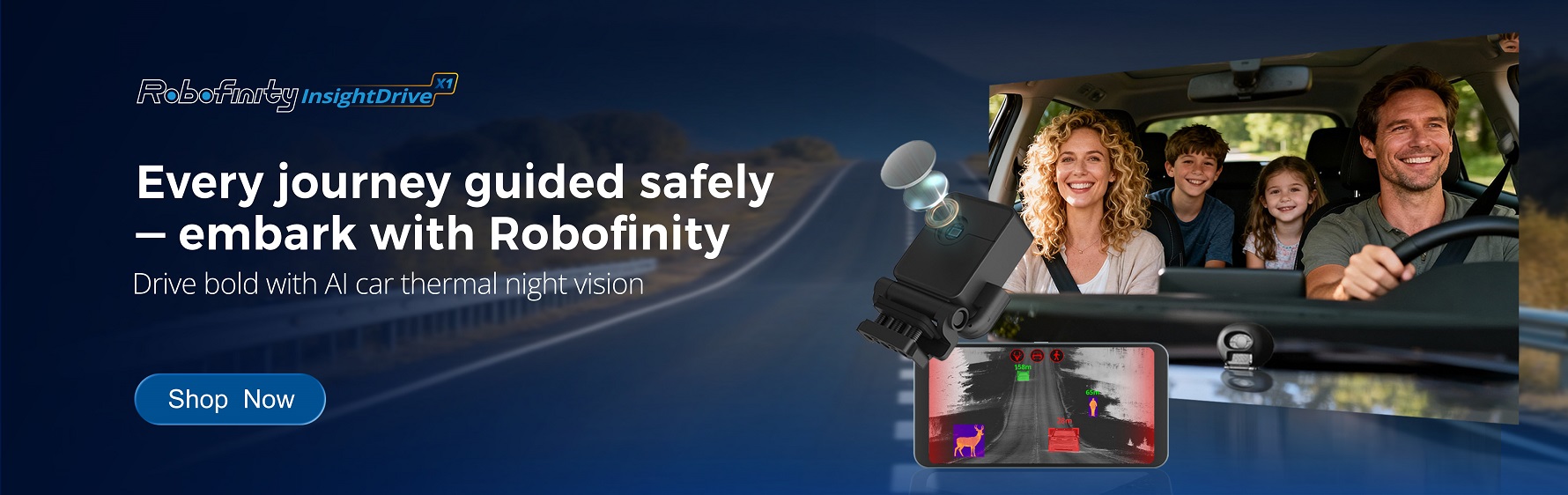



Why Car Thermal Night Vision Matters for Driving?
Started 2 months ago by Robofinity in Robofinity InsightDrive
Car Thermal Night Vision covers the zone that the headlights miss..
Body
Why Car Thermal Night Vision Matters for Driving?
Your headlights reach about 100 meters. At highway speed, that's reaction time — nothing more. Car Thermal Night Vision works on heat, not light. Pedestrians, animals, and cyclists 200 meters out become visible before your high beams ever find them. It's not a luxury feature. It's the gap filler for night driving.
One common question from drivers is:
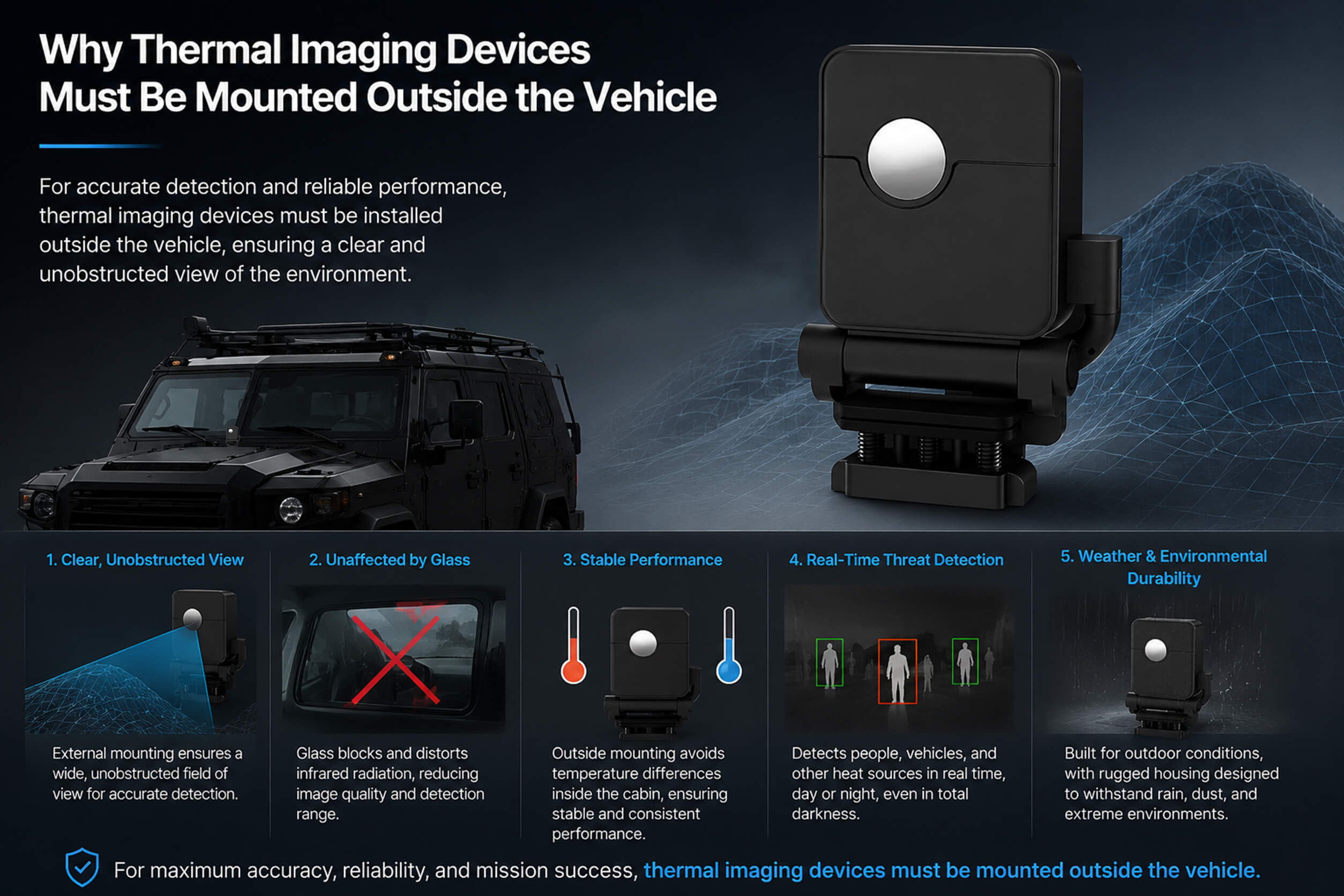
“Why does the thermal camera need to be mounted outside the vehicle?” "Can't you just stick it behind the windshield, like a dashcam?"
The reason is simple: glass interferes with infrared thermal signals.
Glass is opaque to infrared. Heat radiation can't pass through a standard windshield — the lens sees the glass itself, not the road ahead. You'd get a blurry thermal image of your windshield, nothing else.
Automotive-grade Car Thermal Night Vision lenses are typically rated IP67 or IP69K — they handle high-pressure washdowns. The Car Thermal Night Vision lens window is made from infrared-transparent materials like germanium or zinc sulfide, not glass. It passes thermal radiation freely and holds up to UV, rain, and road vibration.
1.Body heat at 37°C makes people the brightest targets in the dark, Car Thermal Night Vision visible beyond 200 m.
2.Roadside wildlife detected before they step into the lane. Reduces collision risk significantly.
3.When visible-light cameras go white, Car Thermal Night Vision still cuts through light fog to show heat sources.
4.No lights, dark clothing — detected via rider body heat and motor warmth before visual contact.
Car Thermal Night Vision doesn't replace headlights or radar. It covers the zone they miss — beyond the light, below the noise floor, where most night-time hazards actually hide.
-
No one is replied to this thread yet. Be first to reply!