

Can InsightDrive Be Used in Rain or Snow?
Started 2026-11-03 04:51:45 by Robofinity


 in Robofinity InsightDrive, Product Guides
How InsightDrive Performs Across Different Weather Conditions
Body
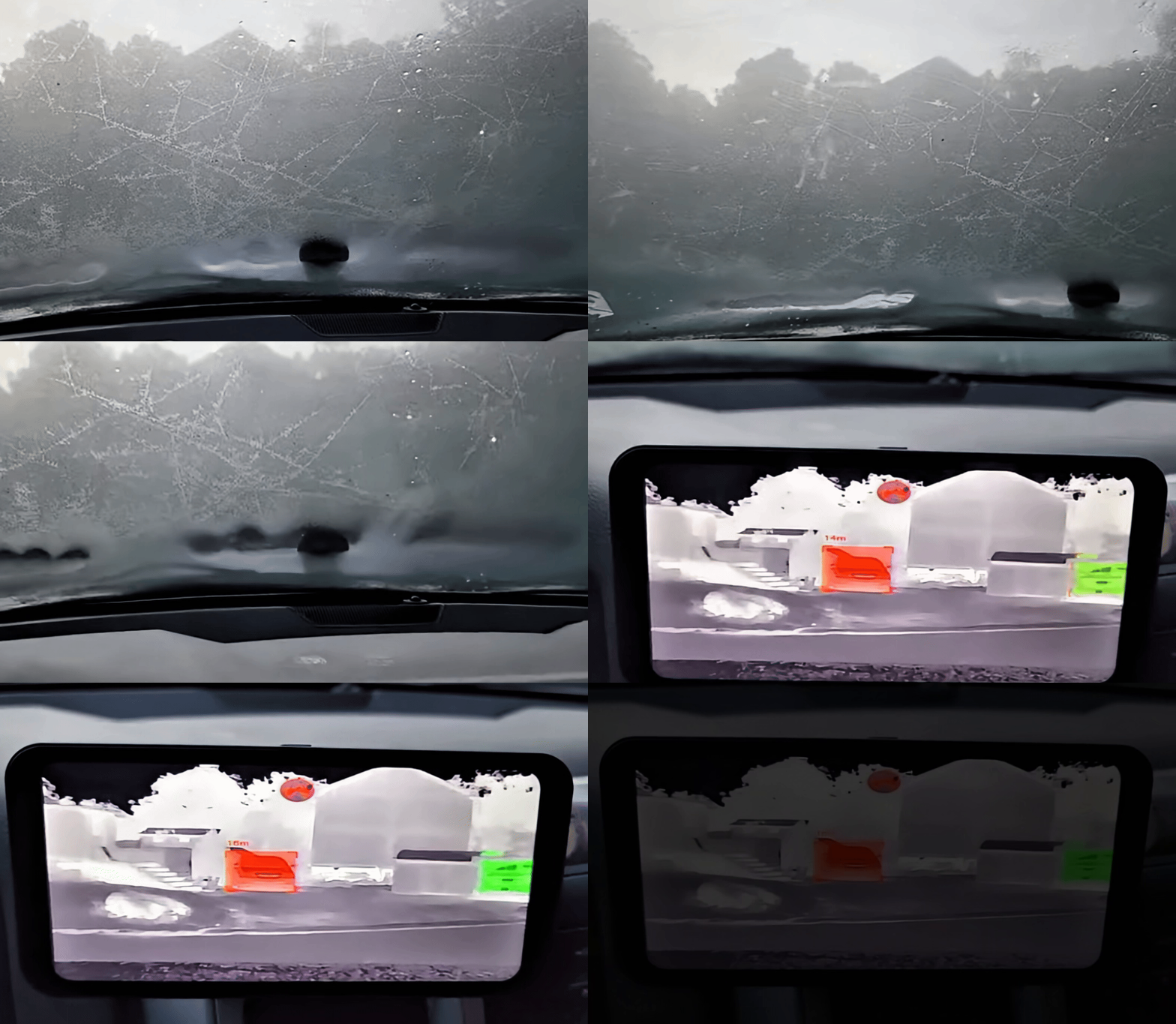
Can InsightDrive Be Used in Rain or Snow? Here's How Thermal Imaging Really Works
One of the questions we hear most often is:
Can InsightDrive still be used in rain, snow, or fog? And when does thermal imaging perform at its best?
The short answer is “yes”—but like any imaging technology, thermal imaging performs differently depending on the environment.
---
Thermal Imaging Sees Temperature Differences, Not Colors
Thermal imaging works by detecting temperature differences (thermal contrast) between objects in a scene.
The clearer the temperature difference, the clearer the image.
For example:
- Ambient temperature: 25°C (77°F)
- A pedestrian: around 37°C (98.6°F)
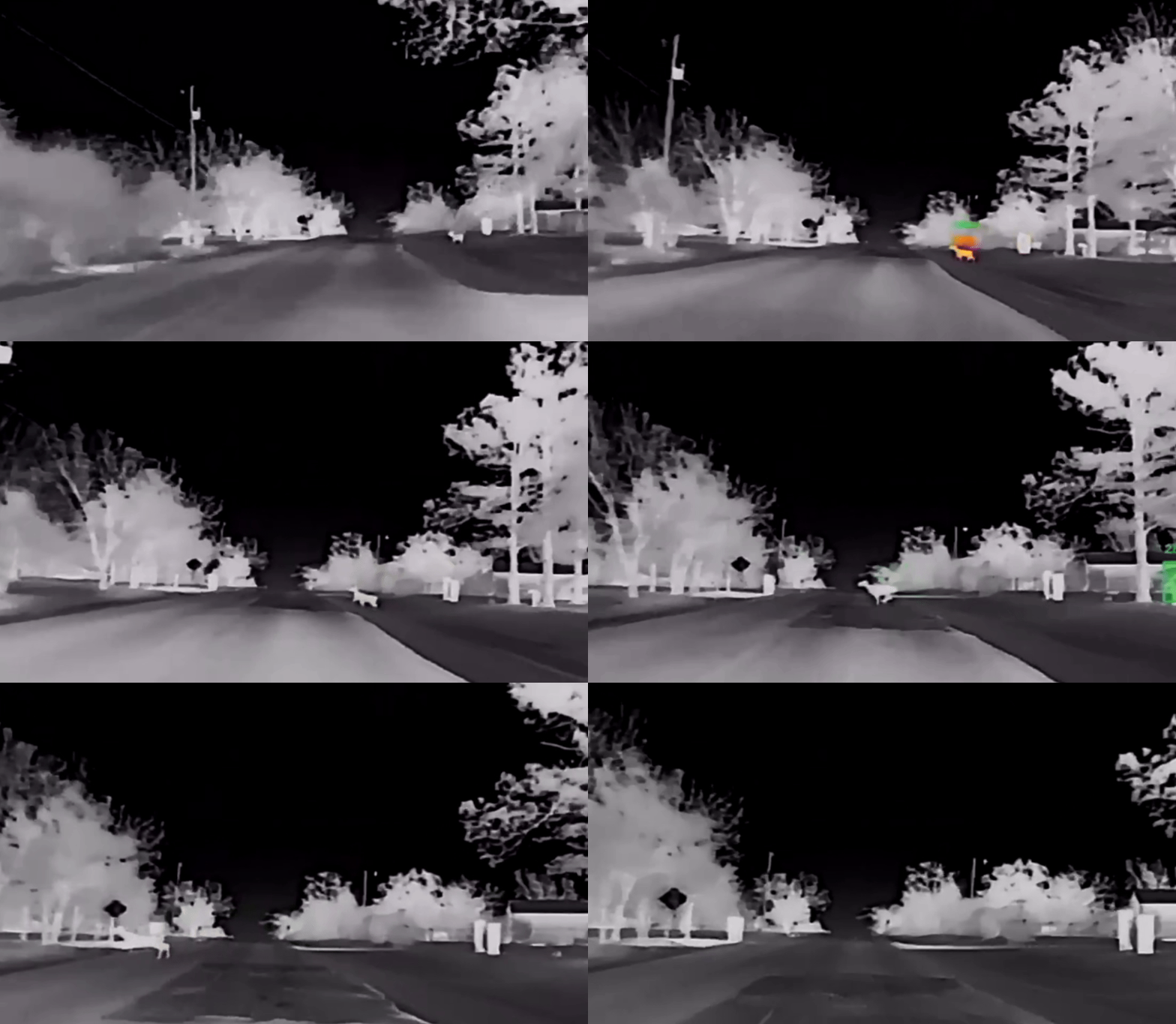
- Moving vehicles, engines, and animals are also typically much warmer than their surroundings.
Because these objects stand out from the cooler background, they are easy to detect and their outlines appear much more distinct.
Simply put:
The greater the temperature difference, the better the thermal image.
---
Why Does Thermal Imaging Sometimes Look Less Distinct?
When everything in the environment is close to the same temperature, thermal contrast decreases.
This commonly happens when:
- There are no significant heat sources nearby.
- Objects in the scene have similar temperatures.
- On hot summer afternoons, sunlight has heated roads, buildings, trees, and parked vehicles for hours.
In these situations, thermal imaging still works, but objects blend together more because there is less temperature difference to separate them.
This is a characteristic of thermal imaging itself—not a limitation of the camera.
---
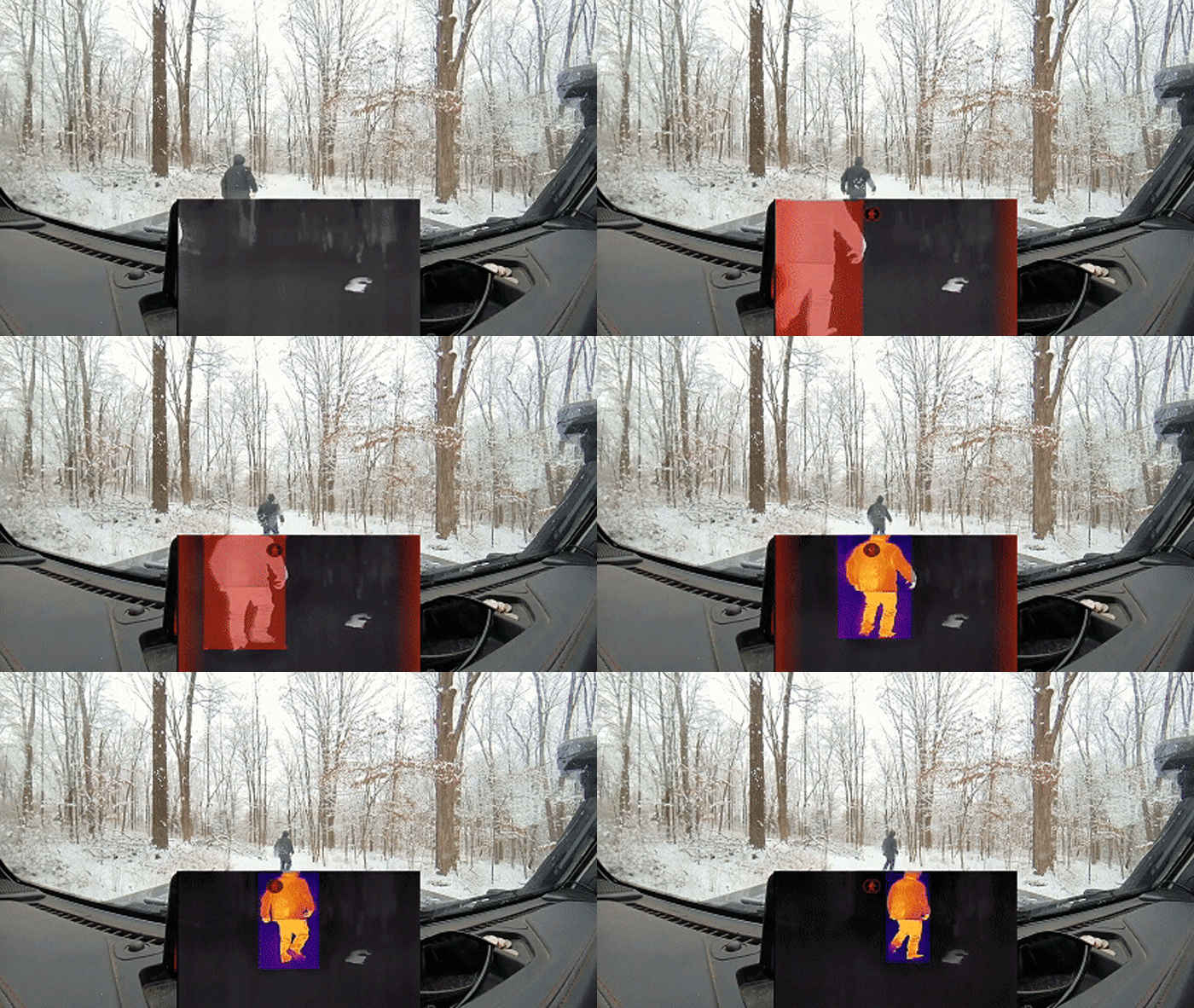
Can It Still Be Used in Rain, Snow, and Fog?
Yes.
InsightDrive uses passive Long-Wave Infrared (LWIR) technology. Unlike active infrared cameras, it does not project infrared light. Instead, it detects the natural thermal radiation emitted by people, animals, vehicles, and other objects.
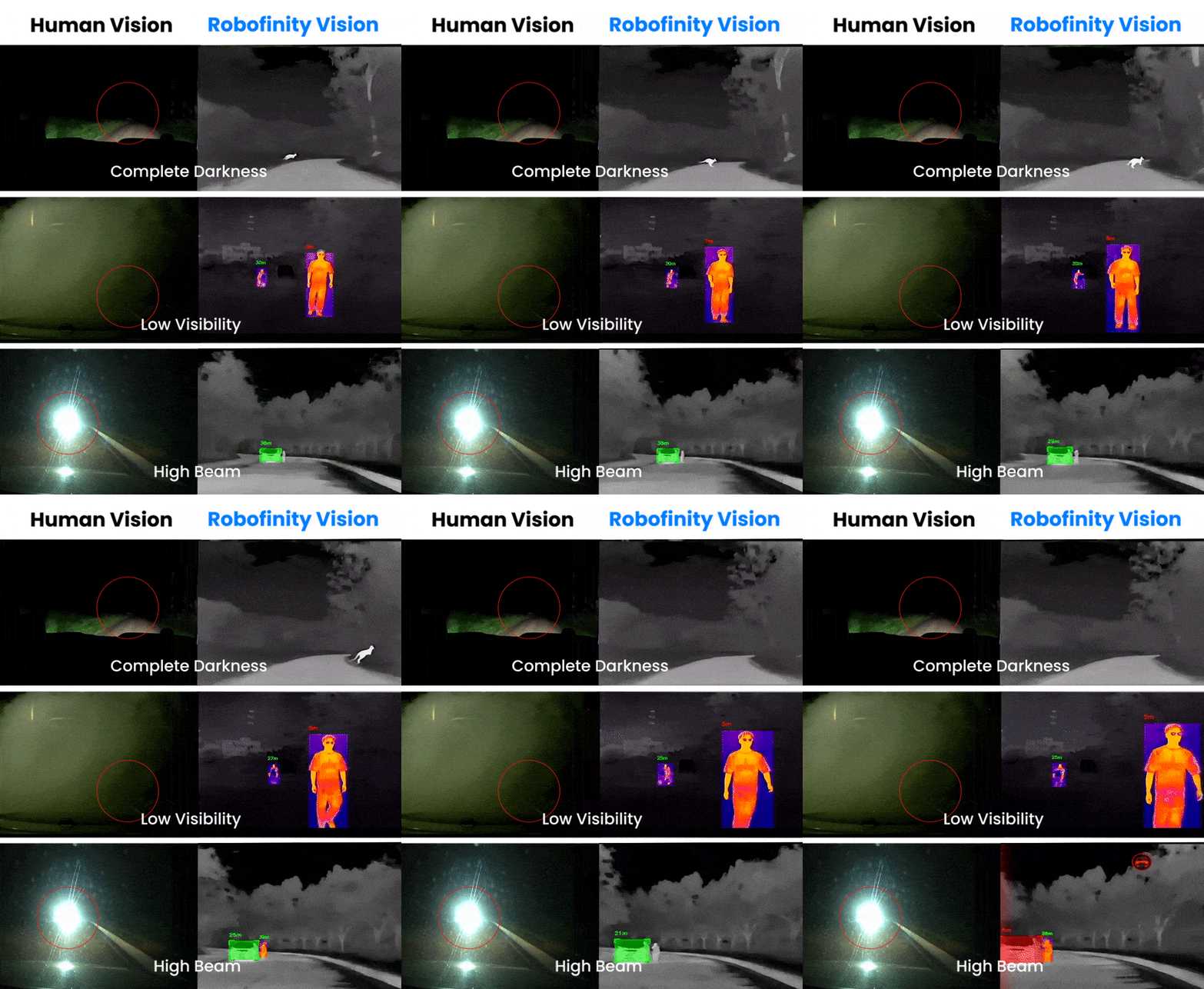
This allows it to continue identifying heat signatures even when visibility is reduced by darkness, rain, fog, or snow.
---
Why Can Heavy Rain or Dense Fog Affect Thermal Imaging?
Water in the atmosphere absorbs and scatters infrared energy.
During extremely heavy rain or very dense fog, this can reduce:
- Detection range
- Thermal contrast
- Overall image clarity
This is a fundamental characteristic of thermal imaging physics and applies to all passive thermal cameras.
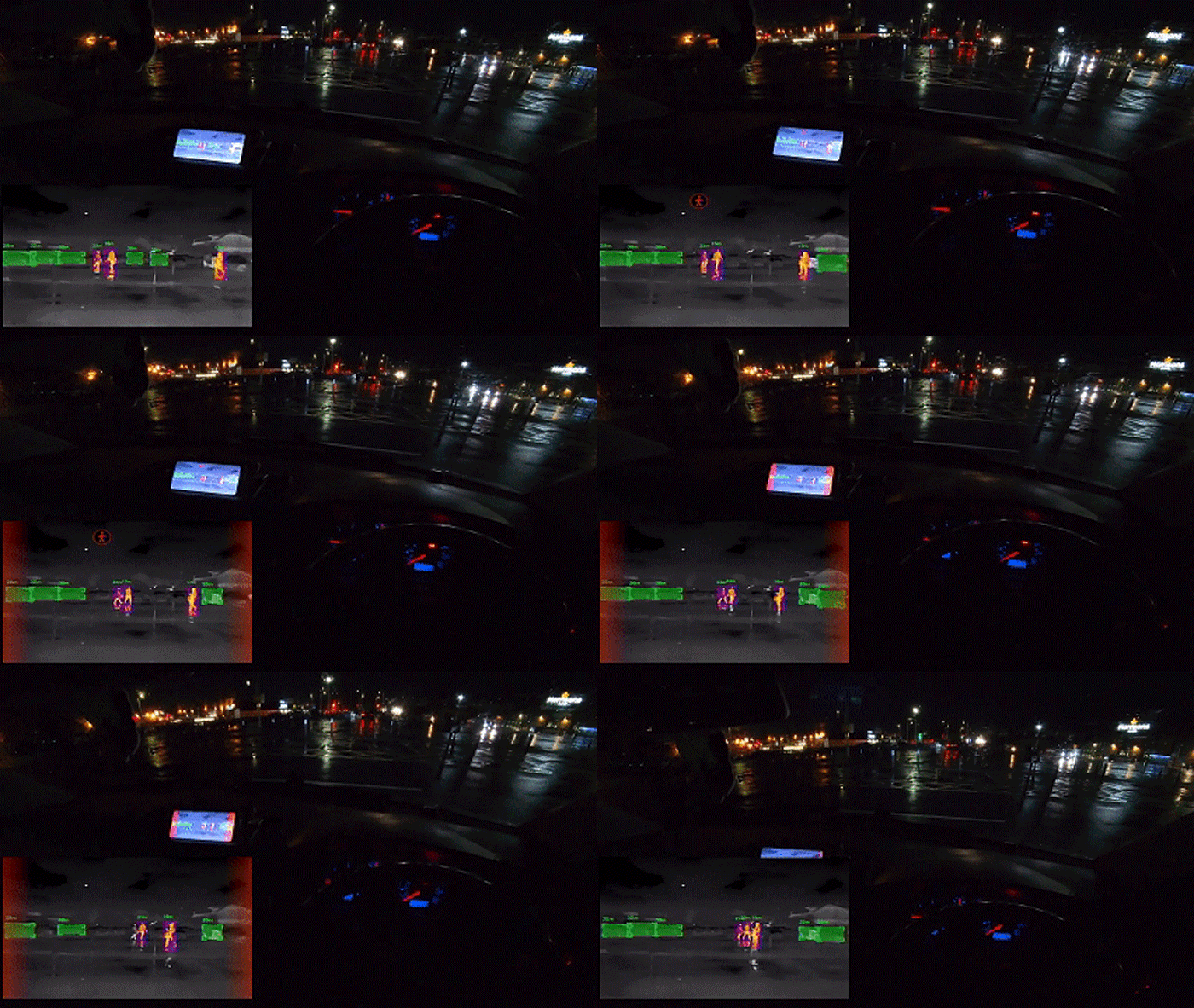
However, throughout our real-world testing in rain, snow, and typical foggy conditions, InsightDrive has consistently provided reliable detection of pedestrians, animals, and vehicles without affecting normal driving use.
---
When Does Thermal Imaging Perform Best?
The ideal conditions for thermal imaging are usually after sunset and throughout the night.
As the environment cools:
- Roads and buildings release the heat stored during the day.
- The overall background temperature becomes more uniform.
- People, animals, and moving vehicles remain significantly warmer than their surroundings.
This creates stronger thermal contrast, making heat signatures stand out much more clearly.
On a hot summer afternoon, sunlight warms roads, buildings, and vehicles to similar temperatures, reducing thermal contrast. Likewise, on a snowy day, if everything in the scene has cooled to nearly the same temperature and there are no significant heat sources, thermal contrast will also be low. Thermal imaging performs best whenever a subject stands out from its surroundings with a clear temperature difference, regardless of whether the environment is hot or cold.
---
The Bottom Line
Thermal imaging is based on simple physics:
- Greater temperature differences produce clearer images.
- Higher moisture levels in the air can reduce infrared transmission, especially in extremely heavy rain or dense fog.
Even with these natural limitations, Robofinity Car Thermal Night Vision offers a significant advantage over conventional cameras in low-visibility conditions. By making pedestrians, animals, and vehicles easier to detect at night, it gives drivers more time to react and helps make nighttime driving safer.
-
No one is replied to this thread yet. Be first to reply!